

Building a skincare routine should not feel complicated. Yet most people end up with ten products, a fifteen-minute process, and skin that still does not look the way they want it to. The problem is not the effort. It is the approach.
A 3-step skincare routine built around the right products in the right order outperforms a shelf of mismatched serums and creams every time. Not because simplicity is a trend. Because your skin functions better when its inputs are consistent, compatible, and targeted at what it actually needs rather than everything a marketing campaign suggested it might need.
This guide walks you through exactly what a 3-step skincare routine looks like, why each step works the way it does, what happens to your skin when those steps are done correctly, and how to choose products that make the routine worth following every day.
What Makes a 3-Step Skincare Routine Work When Longer Routines Fail
The logic behind a longer routine feels sound at first. More products should deliver more results. In practice, the opposite is consistently true for the majority of skin types.
Your skin barrier is a structured system of lipids, proteins, and natural moisturizing factors. It controls moisture retention, regulates how deeply ingredients penetrate, and manages your skin's daily repair cycle. When it is functioning correctly, your skin holds hydration, reflects light evenly, and recovers from stress without visible reaction.
When you apply six, eight, or ten products in succession, each with its own pH, preservatives, emulsifiers, and active ingredients, your barrier spends most of its energy processing the input rather than doing the repair work it was designed for. A study in the Journal of Investigative Dermatology found that repeated disruption of the stratum corneum, even through mild daily product application, significantly impairs barrier recovery when products are layered without adequate absorption time.
A 3-step skincare routine changes this dynamic entirely. Your barrier receives three predictable inputs twice daily. It processes them efficiently, completes its repair work during the overnight cycle, and shows you the results of that work in your complexion over the following weeks.
The three steps that your skin genuinely needs every day are cleansing, treatment and hydration, and moisture sealing. Everything else is optional and should only be added to address a specific confirmed concern the core routine cannot resolve on its own.
Why the Order of Your 3-Step Skincare Routine Matters as Much as the Products
Most people understand that skincare products go on in a certain order. Fewer people understand why that order matters biologically rather than just logically.
Your skin's surface has a physical and chemical structure that determines how deeply each product can penetrate. Products applied first have direct access to clean skin. Products applied later have to work through the layers of whatever came before them. If the wrong product goes first, it creates a partial barrier that prevents everything after it from absorbing properly.
The correct order for a 3-step skincare routine is always cleanser first, serum second, moisturizer third. In the morning, SPF is a fourth mandatory step that goes on after the moisturizer.
The cleanser goes first because it removes the physical and chemical residue that would block every other product. This includes overnight product residue in the morning and the day's accumulated SPF, sebum, makeup, and pollution in the evening. A cleanser that strips the barrier while removing that residue creates a problem that your serum and moisturizer then have to spend their activity solving rather than delivering their intended benefits.
The serum goes second because it contains the smallest molecules of the three core products. Small molecules need clear access to the skin to penetrate the layers they are designed to treat. A serum applied to clean, slightly damp skin reaches the mid-epidermal layers where hydration and treatment actives do their most meaningful work.
The moisturizer goes third because it seals everything that came before it. It is not primarily a hydration product. It is a protection and sealing product that slows the evaporation of the hydration your serum delivered and creates a soft emollient layer that keeps your surface skin comfortable and resilient throughout the day.
Get this order right and your 3-step skincare routine performs above the level of routines twice its length. Get it wrong and each product works at a fraction of its potential.
Step 1 — The Cleanser: Where Your 3-Step Skincare Routine Begins and Where Most People Get It Wrong
The cleansing step is the most skipped, most rushed, and most misunderstood step in any skincare routine. It is also the most consequential. A cleanser that strips your barrier while cleaning makes every product you apply afterward less effective. A cleanser that preserves your barrier while removing everything that should be removed sets your entire routine up for success.
The test for your current cleanser is simple. Wait sixty seconds after rinsing and pat dry. If your skin feels tight, dry, or uncomfortable in that sixty-second window, your cleanser stripped it. Your barrier is compromised before your serum and moisturizer even touch your face.
Most foaming cleansers with sulfate-based surfactants fail this test. They produce a satisfying lather and rinse clean, but they remove far more than dirt and SPF. They strip the natural lipids that form the mortar of your barrier structure, disrupting the acid mantle pH and leaving your skin in a recovery state from the very first step.
The solution is a gel oil cleanser that uses gentle amino acid-derived surfactants and oil components that dissolve buildup before water activates the lather. This dual technology removes everything that needs to go without touching what needs to stay.
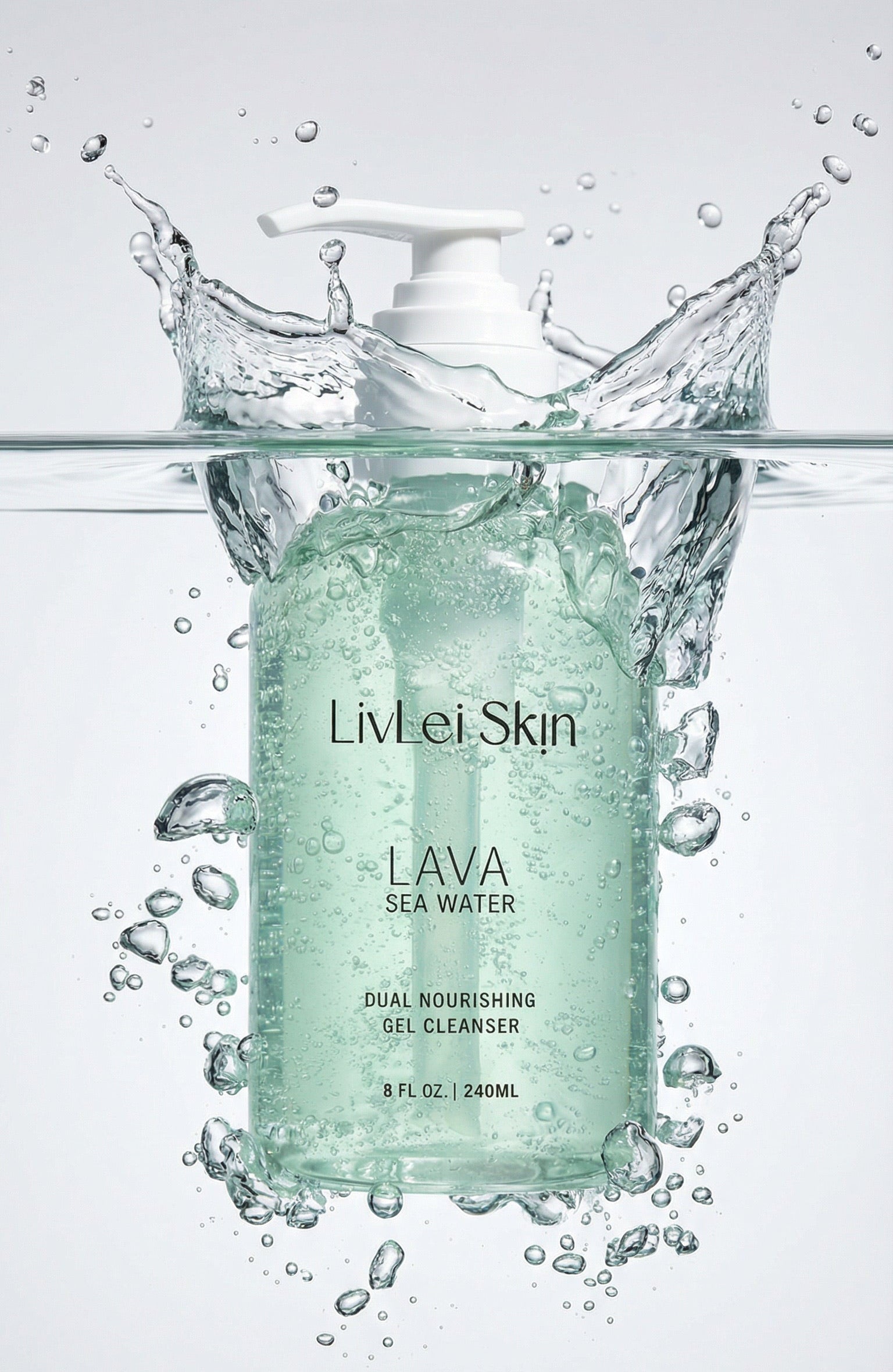
The LivLei Lava Sea Water Dual Nourishing Gel Cleanser was built around this principle. Applied to dry skin first, the oil components dissolve SPF, makeup, and sebum on contact. Add water and the formula transforms into a light, refreshing lather that lifts the dissolved buildup away. Sea water delivers trace minerals that standard cleansers remove. Spirulina Platensis extract provides anti-inflammatory activity that calms the skin during the cleanse. Undaria extract supports moisture retention through fucoidan's water-binding mechanism. Camellia Seed Oil nourishes without congesting.
Your skin finishes this step clean, comfortable, and ready to absorb everything that follows. That is the foundation your 3-step skincare routine needs.
Apply to dry skin. Massage for thirty to sixty seconds. Add water to activate the lather. Rinse thoroughly with warm water. Pat dry.
Shop the Lava Sea Water Dual Nourishing Gel Cleanser at livleiskin.com/products/lava-sea-water-dual-nourishing-gel-cleanser.
Step 2 — The Serum: The Step That Does the Most Work in the Least Amount of Time
The serum is the most active step in a 3-step skincare routine. It is where the ingredients that visibly change your skin live. The cleanser prepares. The moisturizer protects. The serum treats, hydrates at depth, and delivers the actives that produce the results you actually want to see.
The reason serums work where moisturizers fall short is molecular size. Serum molecules are significantly smaller than the emollient and occlusive compounds in a moisturizer. They can penetrate past the surface layers of the epidermis and deliver actives to the cells that need them most. A moisturizer applied without a serum underneath hydrates the outer skin surface but leaves the deeper layers of the epidermis untreated.
For a 3-step skincare routine to deliver visible results, the serum needs to cover three functions simultaneously. First, it needs to deliver hydration at multiple depths using different molecular weights of hyaluronic acid. High molecular weight HA creates immediate surface plumpness. Hydrolyzed HA penetrates to the mid-epidermal layers for sustained moisture. Sodium hyaluronate works between these two to provide balanced coverage across the full depth of the epidermis.
Second, it needs to deliver botanical actives that support the skin's own barrier and renewal mechanisms rather than replacing them. Marine and plant extracts that signal the skin to function optimally perform differently to synthetic actives that stimulate one pathway in isolation.
Third, it needs to deliver peptides that support the structural proteins responsible for firmness and elasticity over time. A serum without a peptide component addresses current hydration but does nothing for the long-term skin quality changes most people want from their routine.
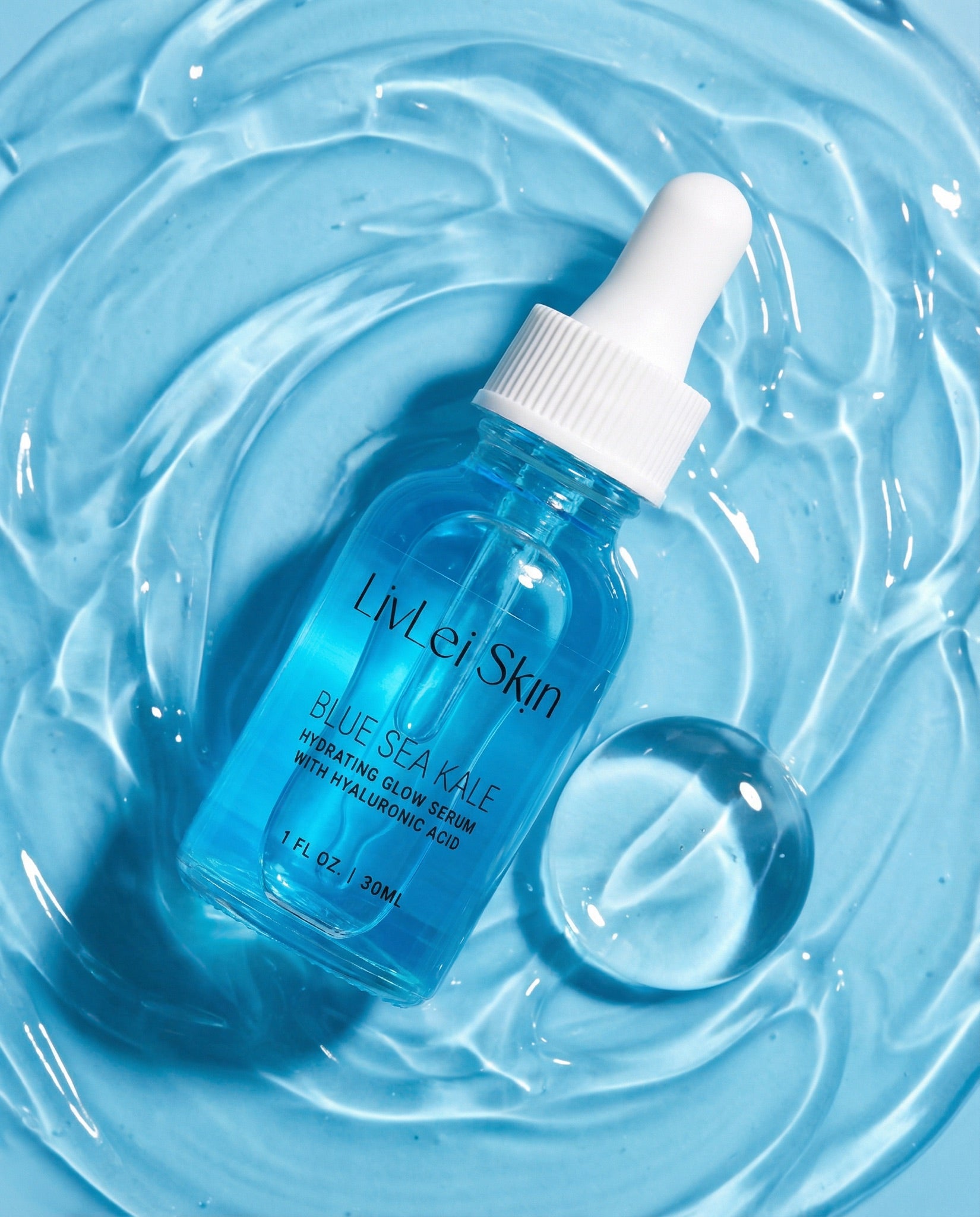
The LivLei Blue Sea Kale Hydrating Glow Serum covers all three functions in a bi-phase formula that combines a water phase and an oil phase in a single bottle. Shake before use and both phases combine to deliver water-phase hyaluronic acid at three molecular weights alongside oil-phase botanicals including Blue Sea Kale Leaf Extract, Gardenia Stem Cells, Raspberry Leaf Extract, and Palmitoyl Tripeptide-5. The texture is lightweight and absorbs within thirty seconds. There is no greasy residue and no waiting period before the next step.
Press three to five drops into clean, slightly damp skin after cleansing. Allow thirty to sixty seconds for absorption before applying your moisturizer.
Shop the Blue Sea Kale Hydrating Glow Serum at livleiskin.com/products/blue-sea-kale-hydrating-glow-serum.
Step 3 — The Moisturizer: Why This Step Is About Protection, Not Just Hydration
The moisturizer is the most misunderstood product in a 3-step skincare routine. It is not where the hydration comes from. That is the serum's job. The moisturizer is where the hydration stays.
Without a moisturizer applied over your serum, transepidermal water loss continues at its normal rate and the hydration your serum delivered evaporates over the next two to three hours. You apply your serum, feel the immediate softness and plumpness, and then watch it gradually disappear by midmorning. That disappearance is not the serum stopping work. It is water evaporating from the skin's surface because nothing is there to slow it down.
A moisturizer creates a semi-occlusive layer that significantly reduces that evaporation rate. The hydration your serum delivered stays in your skin throughout the day rather than escaping into the air around you. That sustained hydration is what produces the lasting softness, the reduced appearance of fine lines, and the luminous complexion that well-hydrated skin naturally has.
For most skin types in a 3-step skincare routine, a lightweight gel moisturizer outperforms a heavy cream for several reasons. It absorbs fully rather than sitting on the surface, which means it does not interfere with SPF adhesion in the morning or leave a residue that congests pores over time. It finishes matte or near-matte, which creates a clean base for makeup or sunscreen. And it provides barrier support without the occlusive load that heavy creams place on skin that does not need that level of sealing.
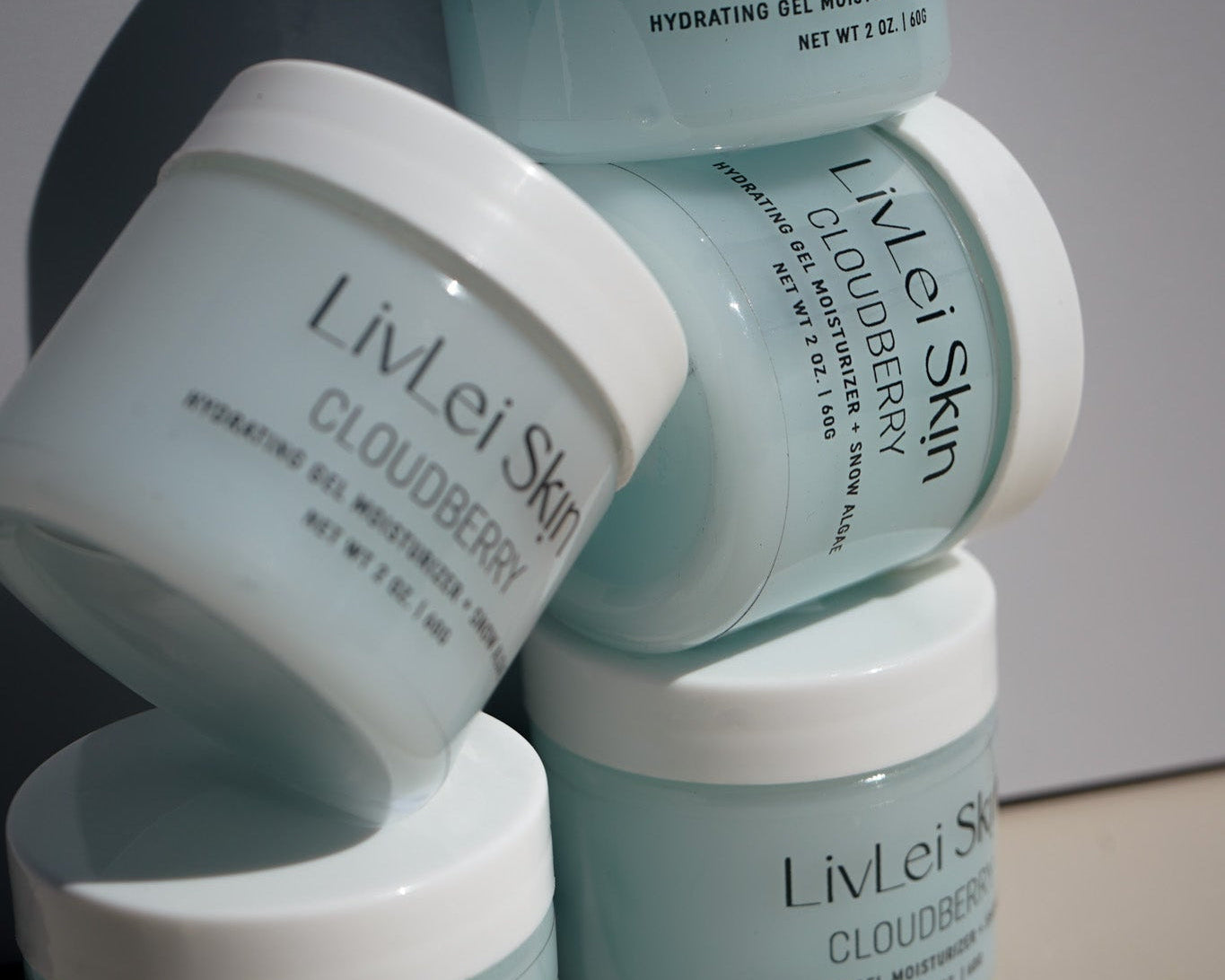
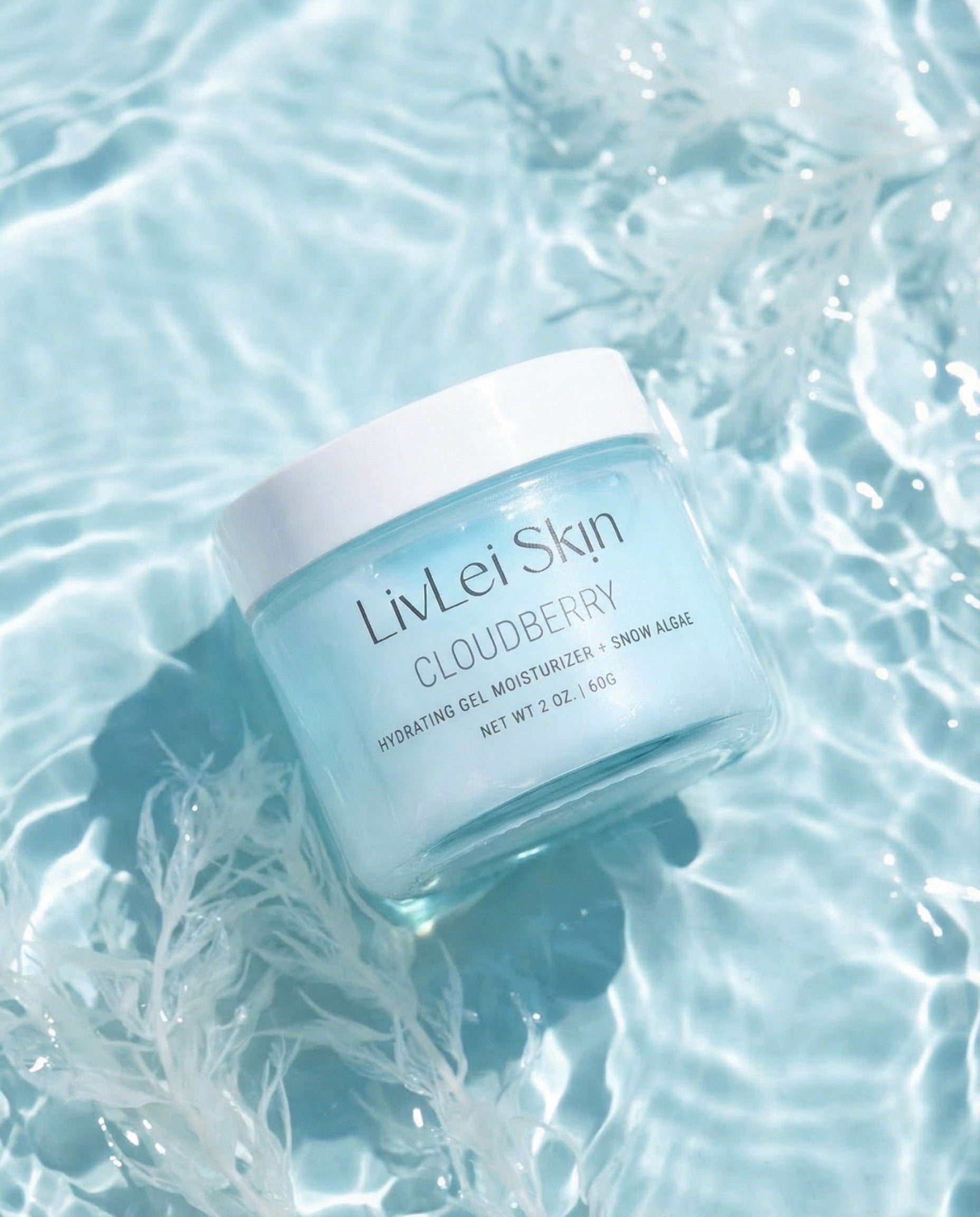
The LivLei Cloudberry Hydrating Gel Moisturizer seals the 3-step skincare routine with a formula that goes beyond simple barrier sealing. Cloudberry Fruit Extract provides omega fatty acids in a ratio that mirrors the skin's own lipid structure, helping repair the barrier at the structural level rather than just coating it. Snow Algae Extract defends against environmental stress and supports cellular resilience. Sodium Ascorbyl Phosphate delivers stable vitamin C for gradual brightening and antioxidant protection. Caffeine tightens and refines the surface immediately on application.
The soft matte finish works equally well under SPF and makeup in the morning and as a standalone final step at night. Apply an even layer across the face and neck after the serum has absorbed. No waiting period needed before SPF in the morning.
Shop the Cloudberry Hydrating Gel Moisturizer at livleiskin.com/products/cloudberry-hydrating-gel-moisturizer-snow-algae.
Your Morning 3-Step Skincare Routine vs Your Evening Routine
The same three products work for both morning and evening use, but the purpose of each session is different and understanding that difference helps you get more from the same routine.
Your morning 3-step skincare routine is preparation. Your skin has been in overnight repair mode and now needs to transition to defense mode. The morning cleanser removes overnight product residue and the sebum produced during sleep. The serum provides daytime hydration and antioxidant protection through its botanical actives. The moisturizer seals everything in and creates a clean, even base for SPF. Morning is also when the caffeine in your moisturizer delivers its most visible immediate benefit, tightening and refining the surface right before you face the day.
Always follow your morning moisturizer with a broad-spectrum SPF 30 or higher. This step is not optional regardless of how much time you have or whether it is cloudy. UV radiation is the primary driver of visible aging, hyperpigmentation, and collagen breakdown. Every other investment you make in your skincare routine is partially undermined without daily sun protection.
Your evening 3-step skincare routine is recovery. This is when your skin is most receptive to actives because its primary function shifts from defense to repair after approximately 10 p.m. The evening cleanser removes the full day's accumulation including SPF, which must be completely removed for the rest of the routine to work. The serum delivers peptides like Palmitoyl Tripeptide-5 that work in synchrony with your skin's overnight collagen signaling cycle. The moisturizer seals everything in and provides the emollient support your barrier needs to complete its repair work while you sleep.
Morning routine takes approximately three minutes. Evening routine takes approximately four minutes because of the more thorough cleansing step needed to remove daytime SPF. That is seven minutes a day for a routine that produces results a thirty-minute multi-step process cannot match.
How to Choose the Right Products for Your 3-Step Skincare Routine
Not every cleanser, serum, and moisturizer combination functions as a system. Most people build their routine by picking products from different brands based on reviews, recommendations, or ingredients that sound appealing. The result is a routine where the pH levels, emollient bases, and active ingredients may conflict with each other rather than complement each other.
When you choose a 3-step skincare routine from a single brand designed as a system, several things happen that do not happen with a mixed-brand routine.
The pH levels are designed to work in sequence. Your cleanser finishes at a pH that optimizes the absorption of your serum. Your serum is formulated at a pH that does not require your skin to adjust before your moisturizer goes on. Each transition in the routine is smooth and deliberate rather than accidental.
The emollient bases are compatible. The oils and emulsifiers used in the serum and moisturizer are chosen to work together rather than compete. You do not get the pilling effect that happens when incompatible silicones or polymers from different brands meet on your skin's surface.
The active ingredients are complementary. A single brand building a three-product system chooses actives that target the same goal from different angles rather than three products all trying to do the same thing or, worse, actives that interfere with each other.
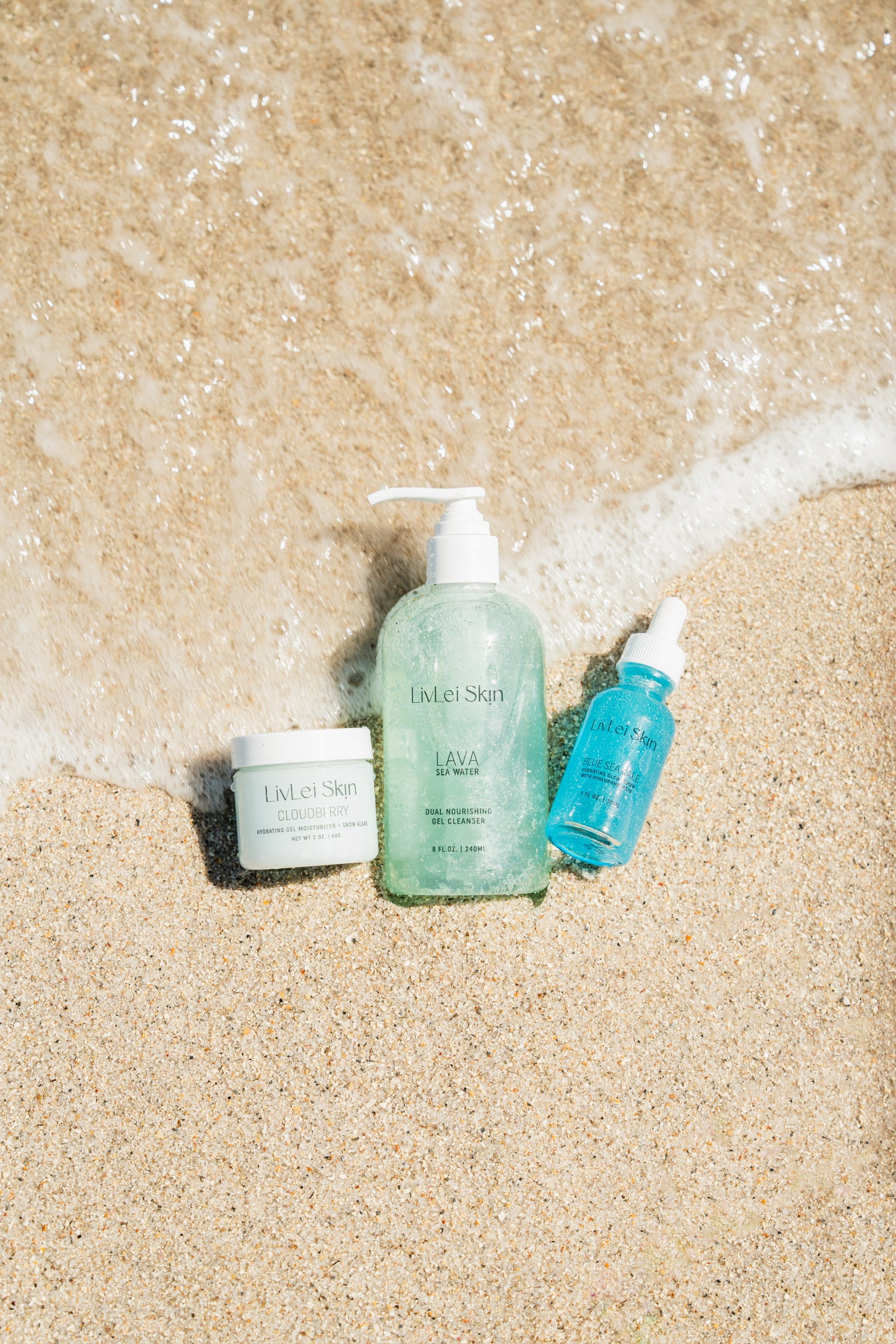
The LivLei three-product system was designed this way from the beginning. The Lava Sea Water Dual Nourishing Gel Cleanser, Blue Sea Kale Hydrating Glow Serum, and Cloudberry Hydrating Gel Moisturizer share a marine and botanical philosophy, a compatible emollient base, and an active ingredient strategy that moves from cleansing to deep hydration to barrier sealing in a single logical sequence.
All three are vegan, formulated for all skin types, and available together as the Splash Collection at livleiskin.com/products/splash-collection.
What Happens to Your Skin at Each Stage of a Consistent 3-Step Skincare Routine
Results from a 3-step skincare routine follow a predictable timeline when the products are right and the routine is followed twice daily without interruption.
Days one to seven are the adjustment period. Your skin transitions from whatever it was receiving before to the new consistent input. Softness and texture improvement are usually noticeable within the first three to four days as the gentle cleanser stops stripping the barrier and the layered hydration from the serum reaches the mid-epidermal layers for the first time. Some people experience minor congestion or sensitivity during this week as their skin recalibrates from a previous over-active or over-stripping routine. This resolves in most cases by day seven.
Days eight to twenty-one are the stabilization phase. Your barrier begins operating in a genuinely supported state rather than in constant recovery mode. Dullness starts to fade as well-hydrated cells reflect light more evenly. Oil production in the T-zone begins to regulate for combination and oily skin types. Fine lines appear softer because the skin is consistently hydrated at every layer rather than oscillating between stripped and temporarily coated.
Days twenty-two to forty-two are when cumulative benefits become visible. The vitamin C from the Cloudberry Moisturizer has now been present through most of one full skin renewal cycle and brightening effects become measurable. Peptide activity from the serum begins to show in improved firmness and elasticity. The overall complexion has a quality that is difficult to describe precisely but easy to recognize: healthy skin that looks the way it does not because of product shimmer or artificial glow but because its barrier is finally working the way it was designed to.
Frequently Asked Questions About the 3-Step Skincare Routine
Is a 3-step skincare routine enough for someone in their 40s or 50s?
Yes, and for many people in this age group it performs better than a multi-step routine. As skin matures, the barrier becomes more easily disrupted and the renewal cycle slows. A 3-step skincare routine with a peptide-containing serum like the Blue Sea Kale Hydrating Glow Serum addresses the two primary concerns of mature skin, hydration loss and reduced collagen signaling, without the inflammation risk that comes from layering multiple actives on a more sensitive barrier. The cloudberry lipids in the moisturizer repair the barrier structure at a level that becomes increasingly important as natural ceramide and fatty acid production declines with age.
Can a 3-step skincare routine help with oily skin?
A 3-step skincare routine is one of the most effective approaches for oily skin, and the reason is counterintuitive. Oily skin frequently overproduces sebum as a stress response to barrier disruption from harsh cleansers and over-active routines. A gentle cleanser that preserves the barrier, a lightweight hydrating serum, and a non-comedogenic gel moisturizer give oily skin the consistent balanced input it needs to stop compensating with excess oil. Most people with oily skin see meaningful oil regulation within four to six weeks of consistent twice-daily use of a gentle 3-step routine.
Do I still need eye cream with a 3-step skincare routine?
Eye cream is not a required step in a 3-step skincare routine for most people. The eye area benefits from the same hydration and barrier support your serum and moisturizer provide when applied carefully to the orbital area. Dedicated eye creams are worth adding when a specific concern such as significant dark circles, puffiness, or deep crow's feet lines requires targeted treatment beyond what your core routine provides. Apply your serum and moisturizer to the orbital area with your ring finger using a gentle pressing motion rather than dragging. Most people find their eye area improves significantly on this routine alone before considering an additional product.
What should I do if my skin reacts to a new 3-step skincare routine?
Mild sensitivity or minor congestion in the first seven days is common when transitioning from a different routine, particularly if your previous cleanser was stripping or your previous products were heavily active. Wait until day ten before evaluating whether a reaction is a transition response or a genuine incompatibility. If sensitivity persists beyond day ten or if you experience significant redness, swelling, or itching, stop use and consult a dermatologist. If you want to introduce the routine more gradually, start with just the cleanser for four days before adding the serum and then the moisturizer one at a time with a few days between each introduction.
How does the 3-step skincare routine differ between morning and evening use?
The products are the same for both sessions. The purpose and the time you take with each step differ. Morning cleansing is lighter because your skin only needs to remove overnight product residue and sleep sebum. Evening cleansing is more thorough because it needs to fully remove SPF, which requires the gel oil cleanser's dry skin application step. Morning use focuses on preparation and defense. Evening use focuses on removal and recovery. SPF is added as a fourth step only in the morning. Both sessions together take approximately seven minutes, which is the most efficient investment you can make in the long-term health and appearance of your skin.
Healthy, hydrated skin is not complicated to achieve. It requires the right three products, the right order, and the consistency to follow through twice daily without negotiation.
The LivLei Splash Collection gives you everything your 3-step skincare routine needs in one decision. The Lava Sea Water Dual Nourishing Gel Cleanser, Blue Sea Kale Hydrating Glow Serum, and Cloudberry Hydrating Gel Moisturizer work as a complete system. Marine and botanical ingredients. Vegan formulas. Designed for all skin types.
Shop the complete Splash Collection at livleiskin.com/products/splash-collection and start your routine today.