

You probably own more skincare products than you actually use. Most people do. There is the vitamin C serum that sits behind the toner you forgot about, the exfoliating pads that come out twice a month, the eye cream you bought because it seemed important, and the moisturizer you switched to when the last one stopped feeling like enough.
The result is a shelf full of products and skin that still does not look the way you want it to.
This is not a willpower problem or a discipline problem. It is a systems problem. When your routine has too many steps, too many actives competing for the same job, and no clear logic behind the sequence, your skin cannot stabilize. It spends all its time reacting rather than recovering, and you keep adding products trying to fix what the previous products caused.
A genuinely effective simple skincare routine does not mean doing less. It means doing the right things in the right order with formulas that work together rather than against each other. This guide breaks down exactly what that looks like, why the three core steps are the only ones most people truly need, and what happens to your skin when you finally stop overcomplicating it.
Why Your Current Skincare Routine Might Be Working Against You
The skincare industry has a financial interest in convincing you that your skin has more problems than it does. Every new product category, whether that is essences, slugging layers, barrier mists, or microbiome tonics, represents a new revenue stream. The marketing works because skin is genuinely complex and because most people do not have a dermatology background to filter the noise.
The result is routines with eight, ten, sometimes twelve steps. Products layered on top of products, actives competing for the same receptors, and a skin barrier that is perpetually inflamed, disrupted, and confused.
Here is what actually happens when you over-layer. Your skin barrier is a thin but highly functional structure made up of lipids, proteins, and natural moisturizing factors. It regulates water loss, keeps irritants out, and supports the renewal cycle that keeps your skin looking fresh. When you apply multiple active ingredients daily, particularly acids, retinoids, vitamin C, and niacinamide all at once, you disrupt that barrier faster than it can repair itself.
The inflammation this creates is often subtle. Not a visible rash or reaction, just low-grade redness, sensitivity to products that used to work fine, tightness after cleansing, and a dull complexion that never seems to fully brighten no matter what you add. Most people respond to this by adding more products. The cycle continues.
A simple skincare routine breaks this cycle. Three well-chosen steps give your barrier consistent, predictable input that it can work with rather than fight. Your skin stabilizes. Sensitivity decreases. The glow you were chasing with twelve steps starts showing up with three.
What a Simple Skincare Routine Actually Means
Simple does not mean cheap. It does not mean lazy. It does not mean ignoring your skin or skipping anything important.
A simple skincare routine means each product has one clear job that does not conflict with the jobs of the other products in your routine. The cleanser cleans. The serum hydrates and treats. The moisturizer seals and protects. Nothing overlaps. Nothing competes. Everything reinforces.
This structure works for three reasons. First, your skin can actually absorb and use concentrated amounts of active ingredients from a single product per step. When you layer a hydrating serum over a hydrating essence over a hydrating toner, you are not tripling the hydration. You are diluting each product's contact time and increasing the surfactant and preservative load on your skin with every extra step.
Second, a shorter routine is one you will actually follow consistently. Consistency is the most underrated factor in skincare results. A three-step routine used every morning and night for eight weeks outperforms a twelve-step routine done sporadically three times a week without exception. The biology of skin renewal operates on four to six week cycles. You need to complete at least one full cycle with the same products before your skin can show you what they are doing.
Third, a focused routine makes it easy to identify what is working and what is not. When something changes in your skin with three products, you know which one to credit or question. With ten products, you have no idea.
Step 1 — Cleanse Without Stripping (This Sets the Tone for Everything That Follows)
Every skincare routine lives or dies at the cleansing step. Not because cleansing is glamorous or because cleanser ingredients do dramatic visible things, but because a bad cleanser undoes every other product you use.
When you cleanse with a formula that strips your skin's natural oils and disrupts your acid mantle, your skin barrier is compromised before you apply a single treatment. Your serum absorbs inconsistently. Your moisturizer gets consumed as emergency barrier repair rather than sitting where it belongs on the skin's surface. Your skin feels tight, looks dull, and produces excess oil as a compensation response.
A good cleanser in a simple skincare routine does two things. It removes what needs to go, which includes SPF, makeup, excess sebum, sweat, and the fine pollution particles that settle on your skin throughout the day. And it leaves completely intact everything your skin needs to function, which includes its natural lipids, its acid mantle pH, and its surface moisture.
Most foam and gel cleansers using sulfate-based surfactants fail the second part. They clean effectively but strip aggressively. The test is how your skin feels sixty seconds after rinsing. If it feels tight, squeaky, or dry, your cleanser stripped it.
A gel oil cleanser solves this. The oil components dissolve SPF and makeup on dry skin before water is added, which means the water-activated lather only needs to lift what is already loosened. There is no need for harsh surfactants to do heavy lifting. The result is genuinely clean skin that still feels soft and balanced.
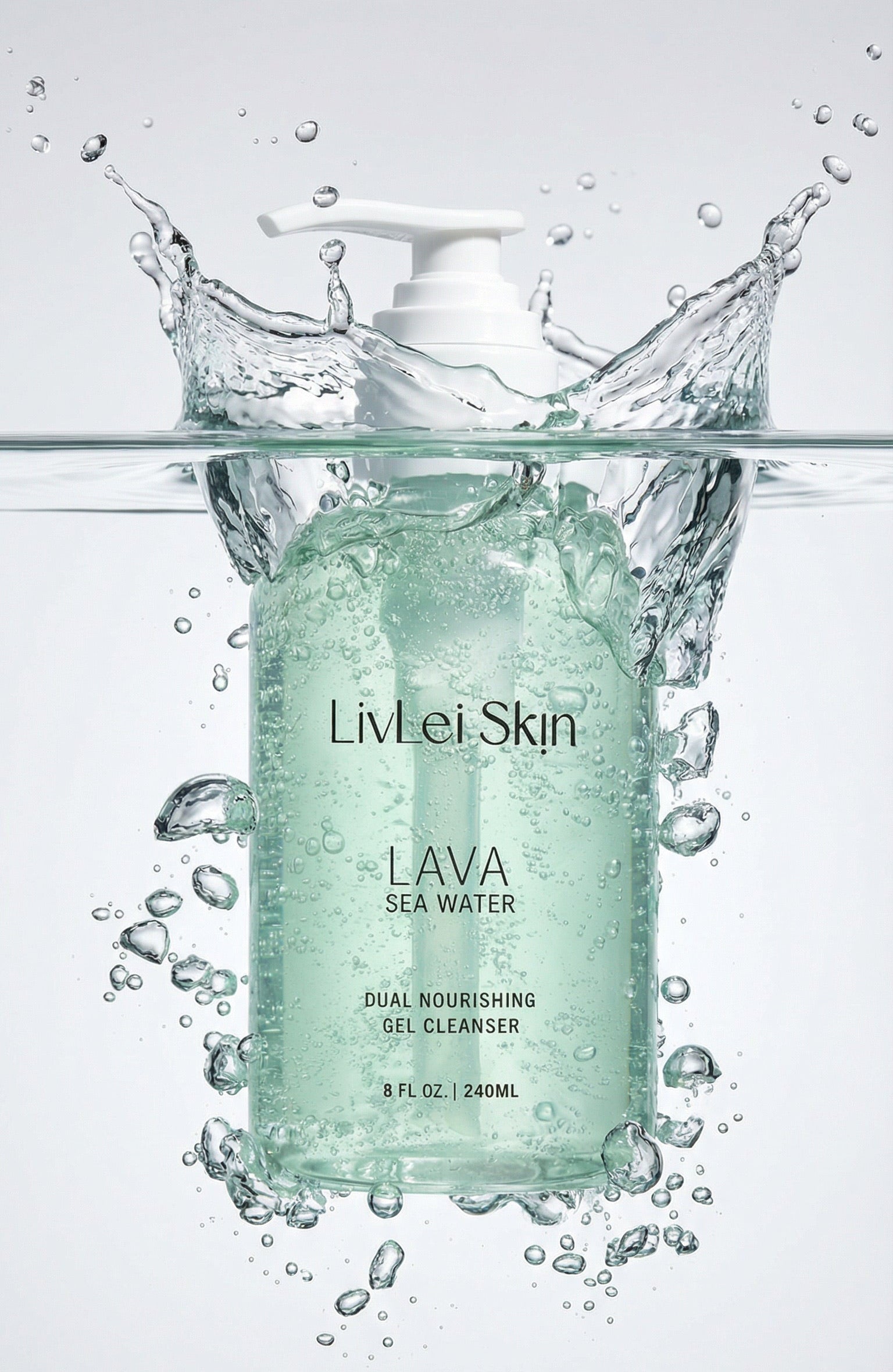
For a simple skincare routine, the LivLei Lava Sea Water Dual Nourishing Gel Cleanser does this job in one step. Sea water delivers minerals that standard cleansers remove. Spirulina and Undaria extract provide anti-inflammatory and barrier-supporting activity during the cleanse itself. Camellia seed oil dissolves oil-based buildup without congesting. Your skin finishes clean and comfortable, which means every product you apply next performs at its best.
Shop the Lava Sea Water Dual Nourishing Gel Cleanser at livleiskin.com/products/lava-sea-water-dual-nourishing-gel-cleanser.
Step 2 — Hydrate at the Right Depth (Surface Moisture Is Not the Same as Skin Health)
Most people treat hydration as one thing. Either your skin has it or it does not. In practice, skin hydration operates at multiple depths and a single-layer approach leaves most of the work undone.
The outer layer of your skin, the stratum corneum, needs surface-level humectants to retain water and stay plump. This is what high molecular weight hyaluronic acid does. It creates a moisture-retaining film on the skin's surface that slows water evaporation and delivers the immediate plumping effect you see after applying a good serum.
The mid-layers of your skin need smaller molecules that can penetrate the outer barrier and deliver hydration to the cells themselves. Hydrolyzed hyaluronic acid and sodium hyaluronate both serve this function, working at different depths to support the moisture content of the skin cells rather than just coating the surface.
Your skin also needs the nutrient signals that trigger it to retain moisture more efficiently over time. This is where botanical actives like marine plant extracts and peptides become important. They do not just add water. They support the skin's own mechanisms for holding on to what it receives.
A serum is the right delivery vehicle for all of this. The molecular size of serum ingredients is smaller than moisturizer ingredients, which means they penetrate the skin before the moisturizer layer seals everything in. Applied to slightly damp skin after cleansing, a well-formulated hydrating serum reaches every layer that needs it.
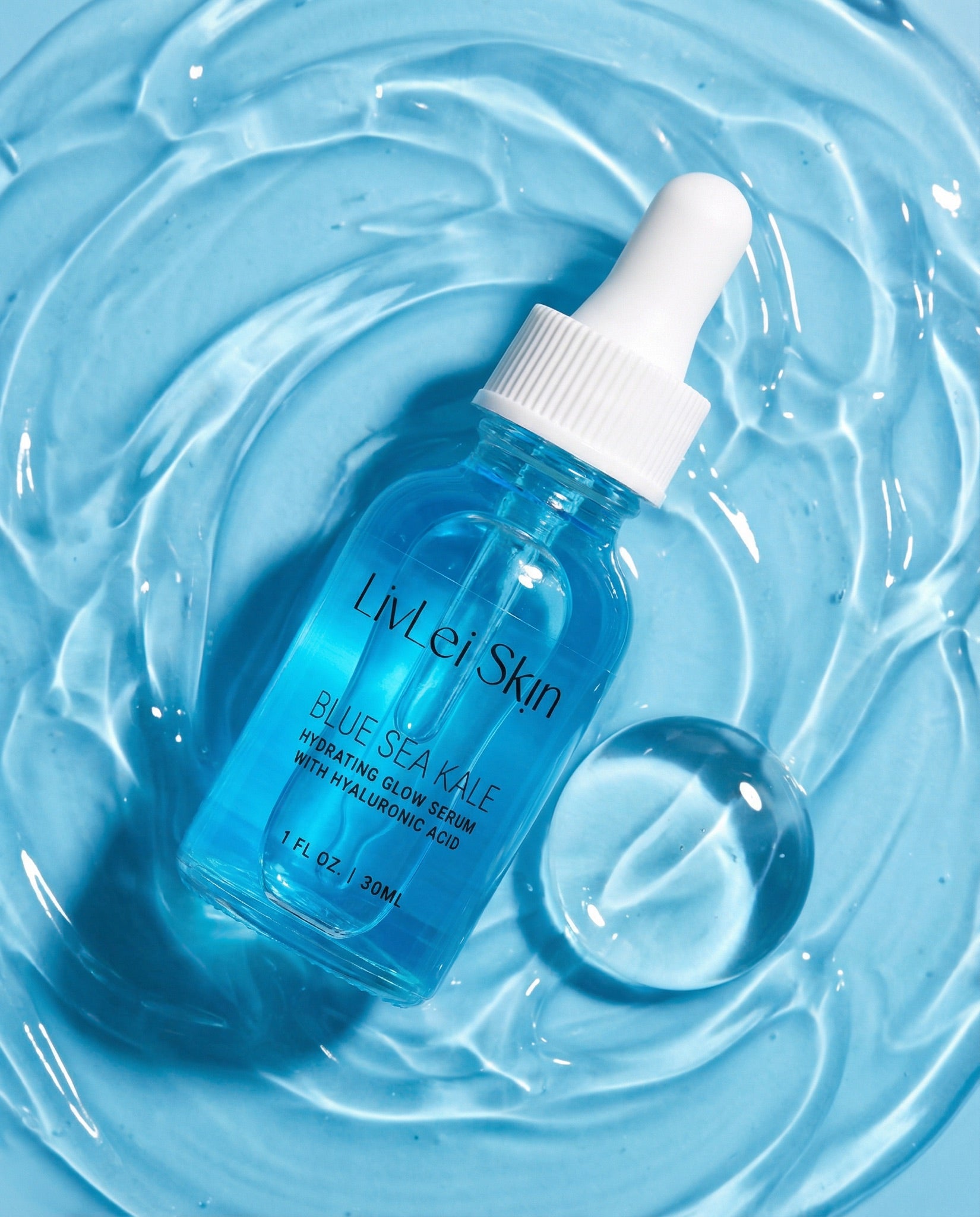
In a simple skincare routine, the LivLei Blue Sea Kale Hydrating Glow Serum handles this step. Its bi-phase formula combines water-phase hyaluronic acid at multiple molecular weights with oil-phase botanicals including Blue Sea Kale extract, Gardenia Stem Cells, and Palmitoyl Tripeptide-5. The result is layered hydration delivered in one application rather than requiring a separate essence, serum, and treatment oil.
Shake before use. Press three to five drops into clean, slightly damp skin. Allow thirty to sixty seconds before moving to step three.
Shop the Blue Sea Kale Hydrating Glow Serum at livleiskin.com/products/blue-sea-kale-hydrating-glow-serum.
Step 3 — Seal and Protect (The Step Most People Either Skip or Get Wrong)
The moisturizer step is the most misunderstood step in a simple skincare routine. People with oily skin skip it because they think they do not need it. People with dry skin use the heaviest cream they can find because more feels like more. Both approaches miss what a moisturizer actually does.
A moisturizer does not add water to your skin. Your serum does that. A moisturizer creates a protective layer on the surface that slows the evaporation of the water your serum just delivered. It also provides emollient compounds that keep the skin's surface soft and flexible, and occlusive ingredients that help seal the barrier against moisture loss throughout the day.
If you skip the moisturizer, your serum's hydration evaporates over the next few hours and you are back where you started. If you use a formula that is too heavy for your skin type, you get congestion, breakouts, and a greasy finish that disrupts your SPF and makeup. The right moisturizer for most skin types in a simple skincare routine is a lightweight gel formula that absorbs fully, leaves no residue, and creates a comfortable base for whatever comes next.
For oily skin specifically, consistent moisturizer use is one of the most effective ways to reduce excess oil production over time. Skin overproduces oil partly as a compensation response to dehydration and barrier disruption. Providing steady hydration and barrier support through a non-comedogenic gel moisturizer teaches your skin it does not need to compensate.
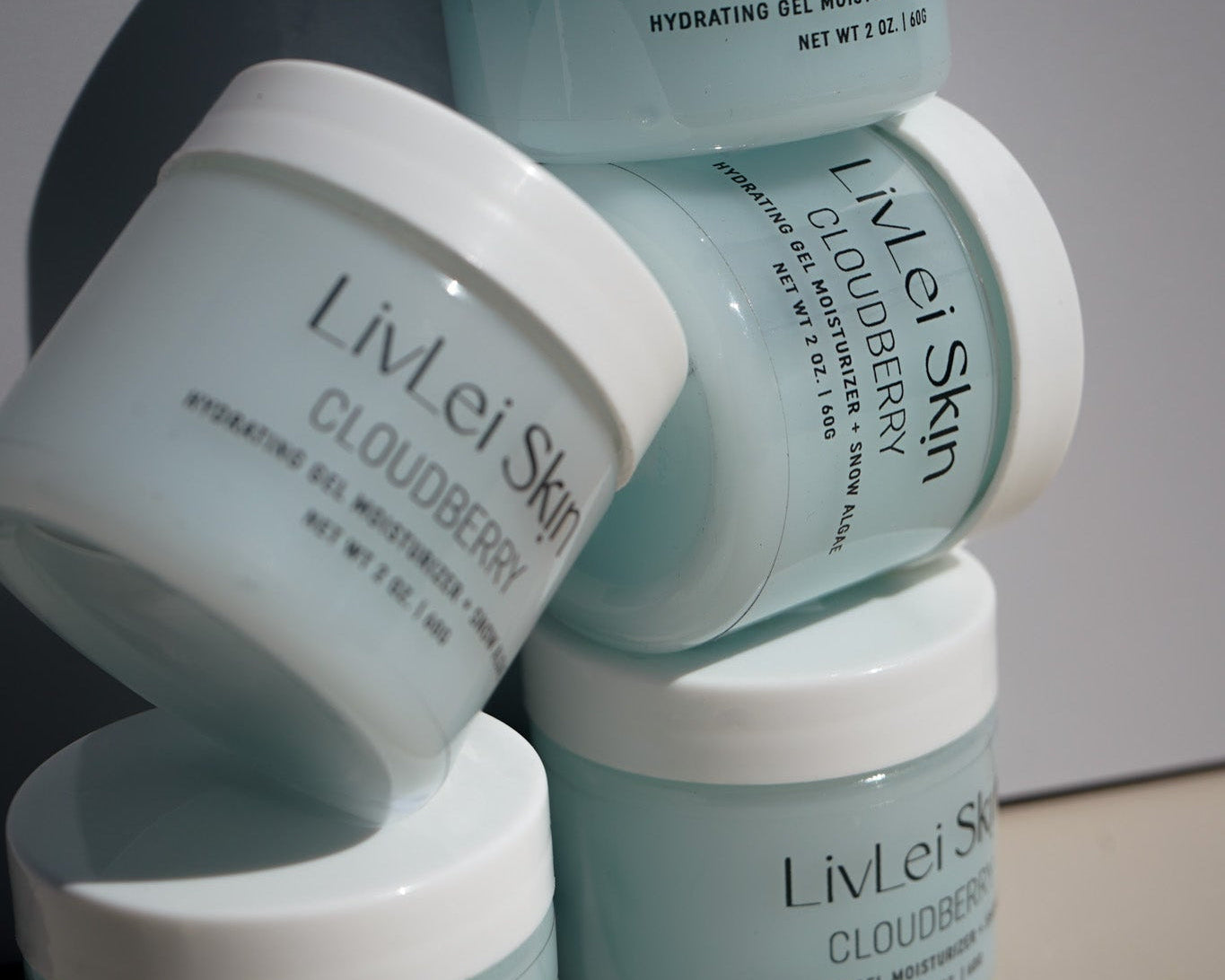
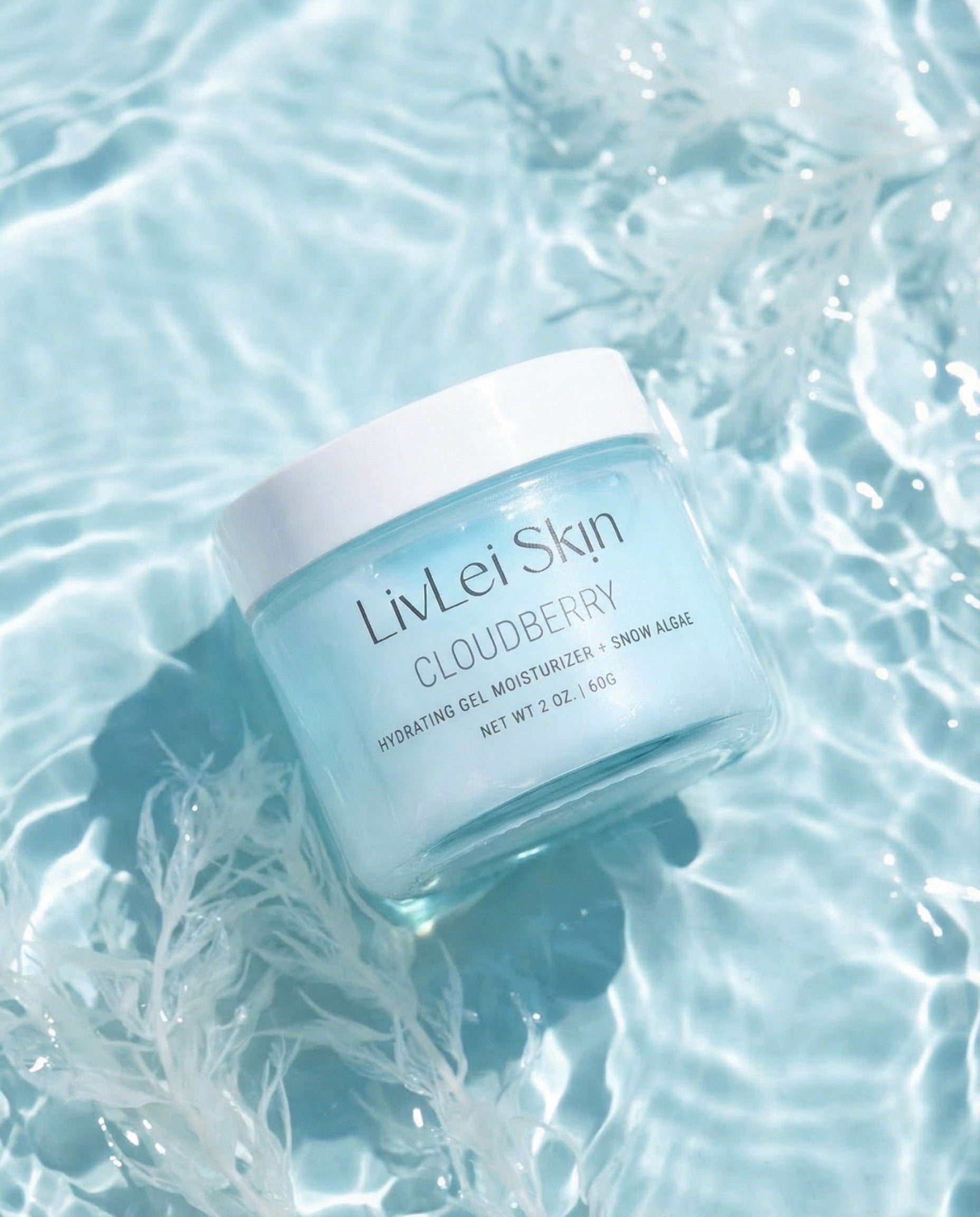
The LivLei Cloudberry Hydrating Gel Moisturizer completes the simple skincare routine with a formula that seals in the serum layer while actively contributing its own benefits. Cloudberry fruit extract repairs the barrier lipid structure. Snow Algae extract defends against environmental stress. Sodium Ascorbyl Phosphate vitamin C brightens over time. Caffeine refines and firms the surface immediately.
The soft matte finish makes it ideal under SPF and makeup in the morning and clean enough to use as your final step at night.
Shop the Cloudberry Hydrating Gel Moisturizer at livleiskin.com/products/cloudberry-hydrating-gel-moisturizer-snow-algae.
Morning Routine vs Evening Routine: They Are Different for a Reason
Your skin operates on a daily cycle. During the day, its primary function is defense. It manages UV exposure, pollution, temperature changes, and physical stress. At night, its primary function is repair. Cell turnover accelerates, barrier lipids are rebuilt, and the renewal cycle that keeps your complexion looking fresh runs at its peak between 11 p.m. and 4 a.m.
Your simple skincare routine should work with that cycle rather than applying the same logic to both halves of the day.
Morning routine: Cleanse with the Lava Sea Water Gel Cleanser to remove overnight sebum and product residue. Apply the Blue Sea Kale Serum to provide daytime hydration. Follow with the Cloudberry Moisturizer for barrier sealing and brightening. Finish with a broad-spectrum SPF 30 or higher. The SPF step is not optional. UV exposure is the primary driver of premature aging, hyperpigmentation, and collagen breakdown. Every other skincare investment you make is undermined without daily sun protection.
Evening routine: Cleanse thoroughly to remove SPF, makeup, and the day's environmental accumulation. Apply the Blue Sea Kale Serum. The evening application is when peptide ingredients like Palmitoyl Tripeptide-5 work alongside your skin's natural repair cycle, signaling the skin to support its own structural proteins while you sleep. Finish with the Cloudberry Moisturizer as your final step.
No extra steps needed. No overnight masks, double cleansing, or treatment layers unless a specific skin concern requires them. The three products cover everything your skin needs in the morning and at night.
How Long Before You See Results from a Simple Skincare Routine
This is the question most people want answered before they commit to any routine, and it deserves an honest answer rather than the "results vary" disclaimer that fills most skincare pages.
Week one: Your skin adjusts. You will notice texture changes almost immediately, particularly softness and a slight plumpness from the hyaluronic acid in the serum. Some people experience a brief purging period if they are transitioning from a stripping cleanser, as their oil production recalibrates. This typically resolves within five to seven days.
Weeks two and three: Dullness begins to fade. The cumulative effect of consistent hydration, barrier repair, and vitamin C from the moisturizer starts to show as a more even, luminous complexion. Fine lines appear softer because the skin is genuinely better hydrated at every layer.
Weeks four to six: The full picture emerges. Your skin barrier is now operating in a stable, supported state rather than in constant recovery mode. Sensitivity decreases. Oil production regulates if that was an issue. The glow you were trying to achieve with a twelve-step routine is now visible with three products used consistently.
The timeline assumes twice-daily use, every day, without swapping in other products. Your skin completes one full renewal cycle in approximately twenty-eight to forty days. Give it that time before making any judgment.
The Most Common Mistakes That Undermine a Simple Skincare Routine
Even a well-chosen three-step routine can fail if the habits around it are wrong. These are the four mistakes that most consistently prevent results.
Switching products too early is the most common. Two weeks is not enough time to evaluate any skincare product. Most people abandon a routine right before it would have started showing results because they expected faster change. Commit to six weeks minimum before deciding whether something is working.
Skipping SPF in the morning is the second. Every brightening, firming, and hydrating benefit your skincare delivers gets partially reversed by daily UV exposure without protection. SPF is not an optional addition to a simple skincare routine. It is the step that protects everything else you are doing.
Using actives from other products on top of this routine creates the same over-layering problem you were trying to escape. If you are using a retinoid, an acid toner, or a prescription topical, those need to be factored into the routine rather than stacked on top of it. A simple routine and a complex active do not always combine cleanly.
Inconsistency is the fourth. A three-step routine used four days out of seven delivers roughly half the results of the same routine used every day. Skin repair and renewal are continuous processes. Gaps in the routine create gaps in the results.
The LivLei Approach: Why Three Products Is the Point
LivLei Skin was built by Leisa and Olivia, an aunt-niece duo from Fort Lauderdale, with a single conviction: the best skincare routine is one you will actually do. Not the most comprehensive one. Not the one with the most impressive ingredient list. The one that fits into your life, covers what your skin genuinely needs, and delivers visible results without demanding a half hour of your morning.
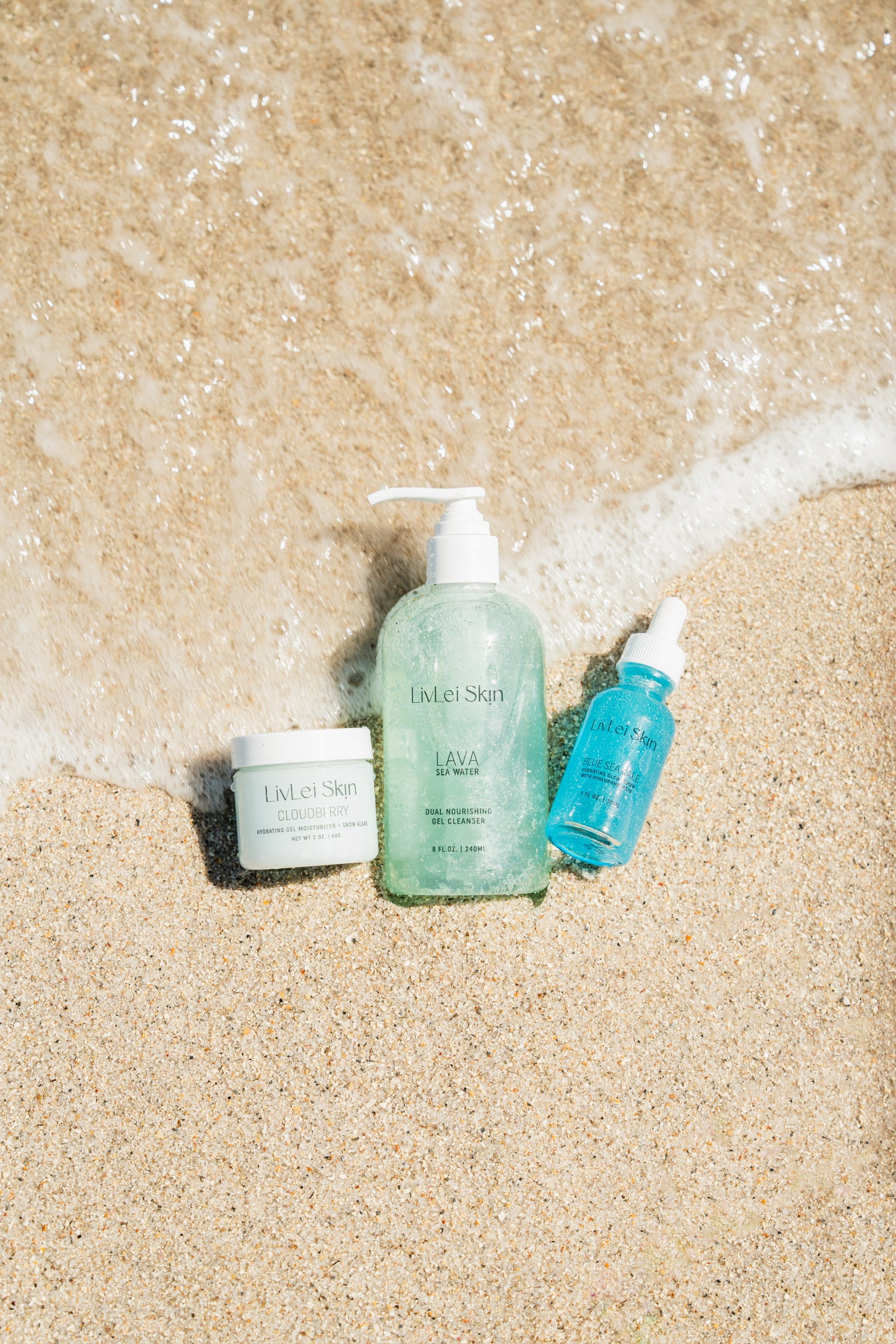
The three-product lineup reflects that conviction directly. The Lava Sea Water Dual Nourishing Gel Cleanser, Blue Sea Kale Hydrating Glow Serum, and Cloudberry Hydrating Gel Moisturizer were designed to work as a system. Each product does its job without overlapping the others. Together they cover cleansing, layered hydration, barrier repair, antioxidant protection, and brightening in three steps and approximately three minutes.
All three products are vegan and formulated for all skin types. Marine and botanical ingredients are used at meaningful concentrations rather than as label additions. The formulas are built around ocean-derived and plant-based actives that perform without the irritation risk of synthetic alternatives.
You can shop all three together in the Splash Collection at livleiskin.com/products/splash-collection and save compared to buying each product separately.
Frequently Asked Questions About Building a Simple Skincare Routine
How many products do you actually need in a skincare routine?
Three products cover the core needs of most skin types: a cleanser, a hydrating serum, and a moisturizer. Morning routines need a fourth product, SPF, which is non-negotiable for anyone concerned about aging, brightening, or pigmentation. Beyond these four, additional products should only be added to address a specific, confirmed skin concern that the core routine is not resolving. Adding products preemptively, before a problem exists, is one of the most common ways people disrupt a routine that was working.
Can a simple skincare routine work for combination skin?
Yes, and it often works better for combination skin than a complex routine does. Combination skin, where the T-zone is oily and the cheeks are normal to dry, typically results from barrier disruption rather than from two genuinely different skin types existing simultaneously. A gentle cleanser that does not strip the T-zone, a lightweight hydrating serum applied all over, and a non-comedogenic gel moisturizer that balances rather than blocks, addresses combination skin more effectively than using different products on different zones.
Do I need a toner in a simple skincare routine?
Most people do not need a toner. The original purpose of toner was to restore skin pH after alkaline soap-based cleansers stripped it. Modern pH-balanced cleansers make this step redundant for most skin types. If your current toner is hydrating and you enjoy using it, it can sit between your cleanser and serum without causing harm. But it is not a required step, and removing it will not make your routine less effective.
Is a 3-step routine enough if I have skin concerns like hyperpigmentation or acne?
A three-step simple skincare routine addresses the foundation: clean skin, proper hydration, and barrier protection. For targeted concerns like hyperpigmentation or active acne, a treatment step can be added between the serum and moisturizer. Vitamin C from a serum or moisturizer addresses hyperpigmentation gradually over weeks. For acne, a spot treatment used as needed is more effective and less disruptive than a dedicated acne cleanser or acid toner used daily. Start with the foundation, give it six weeks, and add only the specific treatment your skin still needs after that.
How do I know if my simple skincare routine is working?
Look for these signs at the four-week mark: skin feels comfortable throughout the day without tightness or mid-afternoon oiliness, texture is smoother than when you started, and your complexion looks more even and luminous. If you were breaking out frequently before, fewer and less severe breakouts are a positive sign even if they have not stopped entirely. If your skin looks and feels noticeably worse at four weeks, review whether you introduced any new products outside the routine or whether your cleanser is stripping the skin barrier.
Your Skin Does Not Need More. It Needs Better.
The glow you are looking for is not hiding behind the next product launch. It is the natural result of skin that is consistently clean, genuinely hydrated, and properly protected. Three steps. Every day. With formulas that actually work together.
LivLei built the routine for you. The Lava Sea Water Dual Nourishing Gel Cleanser, Blue Sea Kale Hydrating Glow Serum, and Cloudberry Hydrating Gel Moisturizer are available together in the Splash Collection. Everything your skin needs. Nothing it does not.
Shop the Splash Collection at livleiskin.com/products/splash-collection.