

Your skin is not the same organ at 7 a.m. that it is at 11 p.m. The products that make sense in the morning are not automatically the right choice at night. The order that works before bed does not always produce the same result before breakfast. And the reason most skincare routines produce inconsistent results is that they ignore this entirely.
Your skin runs on a biological clock. It is governed by the same circadian rhythm that controls your sleep cycle, your hormone levels, and your body temperature throughout the day. That rhythm determines when your skin is in defense mode and when it switches to repair mode. A morning vs night skincare routine that works with this cycle produces results that a one-size-fits-all approach never will.
This guide breaks down exactly what that science means in practice, what your skin is doing differently at each part of the day, and how to build a morning and night routine around that biology using products that actually match what each session requires.
The Circadian Science Behind Your Morning vs Night Skincare Routine
Your skin's circadian rhythm is not a marketing concept. It is a documented biological cycle controlled by a network of clock genes expressed in skin cells that regulate almost every function your skin performs.
During the day, particularly in the morning hours, your skin ramps up its defense mechanisms. Sebum production increases to provide a natural protective film on the surface. Antioxidant enzyme activity rises to neutralize the free radical damage that UV exposure and pollution will cause throughout the day. The skin barrier tightens and its capacity for blocking external irritants peaks in the late morning. Your skin is in active protection mode and your morning routine should work with that, not against it.
At night, the cycle reverses completely. Sebum production drops. The barrier becomes more permeable, which sounds like a weakness but is actually a strategic feature. Increased permeability at night means active ingredients absorb more deeply and efficiently when you apply them before sleep. Cell proliferation, the process of creating new skin cells, peaks between 11 p.m. and 4 a.m. Blood flow to the skin increases during sleep, delivering the oxygen and nutrients that fuel repair. The skin is not resting. It is running its most intensive maintenance cycle while you do.
A morning vs night skincare routine built around this biology does two things that a standard routine cannot. It gives your skin's defense system the tools it needs when defense is the priority. And it gives your skin's repair system the actives it needs precisely when the barrier is most receptive to receiving them.
What Your Morning Skincare Routine Is Actually For
The morning routine is a preparation routine. Its job is to remove the overnight residue on your skin, deliver a layer of hydration that will last through the day, and then seal and protect everything with a barrier that holds up against UV radiation, pollution, and environmental stress for the next eight to twelve hours.
Most people think of their morning routine as the lighter, less important half of their skincare practice. It is actually the half that determines whether the rest of the day does visible damage to your skin or not.
Every morning, your skin has accumulated a layer of overnight product residue, sleep sebum produced during the night hours, and any bacteria or debris transferred from your pillow. A morning cleanser does not need to work as hard as your evening cleanser, but it does need to remove these things cleanly without stripping the barrier that your overnight products spent hours rebuilding.
The morning is also when antioxidant delivery matters most. Free radical damage from UV and pollution is an oxidative process. Antioxidants neutralize free radicals before they can break down collagen, disrupt melanin production, or accelerate cell aging. Applying antioxidant-rich actives in the morning gives them maximum time to be present in the skin during peak UV and pollution hours.
Hydration in the morning routine should be layered and lasting. Your skin loses moisture throughout the day through transepidermal water loss, which accelerates in dry, air-conditioned, or high-UV environments. A hydrating serum delivered before your moisturizer gives your skin a deep reservoir to draw from throughout the day. Your moisturizer then slows the rate at which that reservoir depletes.
SPF is not the final luxury step of a morning skincare routine. It is the most non-negotiable protective measure in any routine regardless of skin type, age, or concern. UV radiation causes approximately 80 percent of visible facial aging according to research published in Clinical, Cosmetic and Investigational Dermatology. Your serum, your moisturizer, and your antioxidants are all partially undermined every day you apply them without SPF on top.
Your Morning Routine Step by Step
Step 1 — Cleanse gently to reset without stripping.
Your morning cleanse has a lighter job than your evening cleanse. There is no SPF or full-coverage makeup to remove. What you are removing is overnight sebum, residual product from the night before, and any surface debris from sleep. A gentle cleanser that preserves your acid mantle pH and leaves your barrier intact is exactly what this step requires.
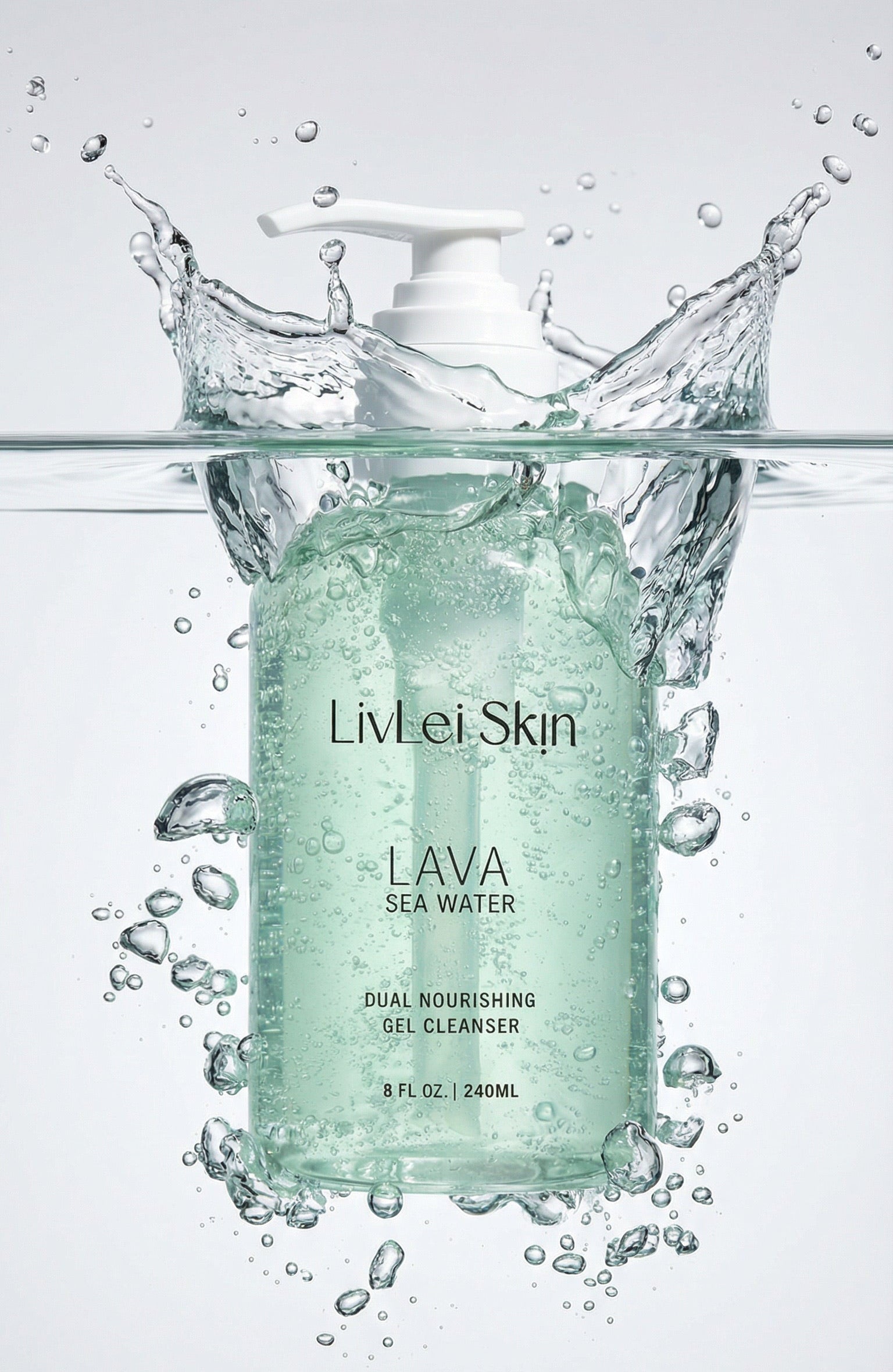
The LivLei Lava Sea Water Dual Nourishing Gel Cleanser is designed for both morning and evening use. In the morning, apply a small amount to dry skin, massage for twenty to thirty seconds, then add water to activate the lather. The sea water in the formula replenishes trace minerals during the cleanse. Spirulina extract calms any overnight inflammation. Rinse and pat dry. Your skin is clean, comfortable, and ready.
Shop the Lava Sea Water Dual Nourishing Gel Cleanser at livleiskin.com/products/lava-sea-water-dual-nourishing-gel-cleanser.
Step 2 — Apply your hydrating serum to slightly damp skin.
The ten to fifteen seconds after patting your face dry are the optimal window for serum application. Your skin is slightly damp and the surface moisture helps humectants like hyaluronic acid draw water into the skin rather than from it.
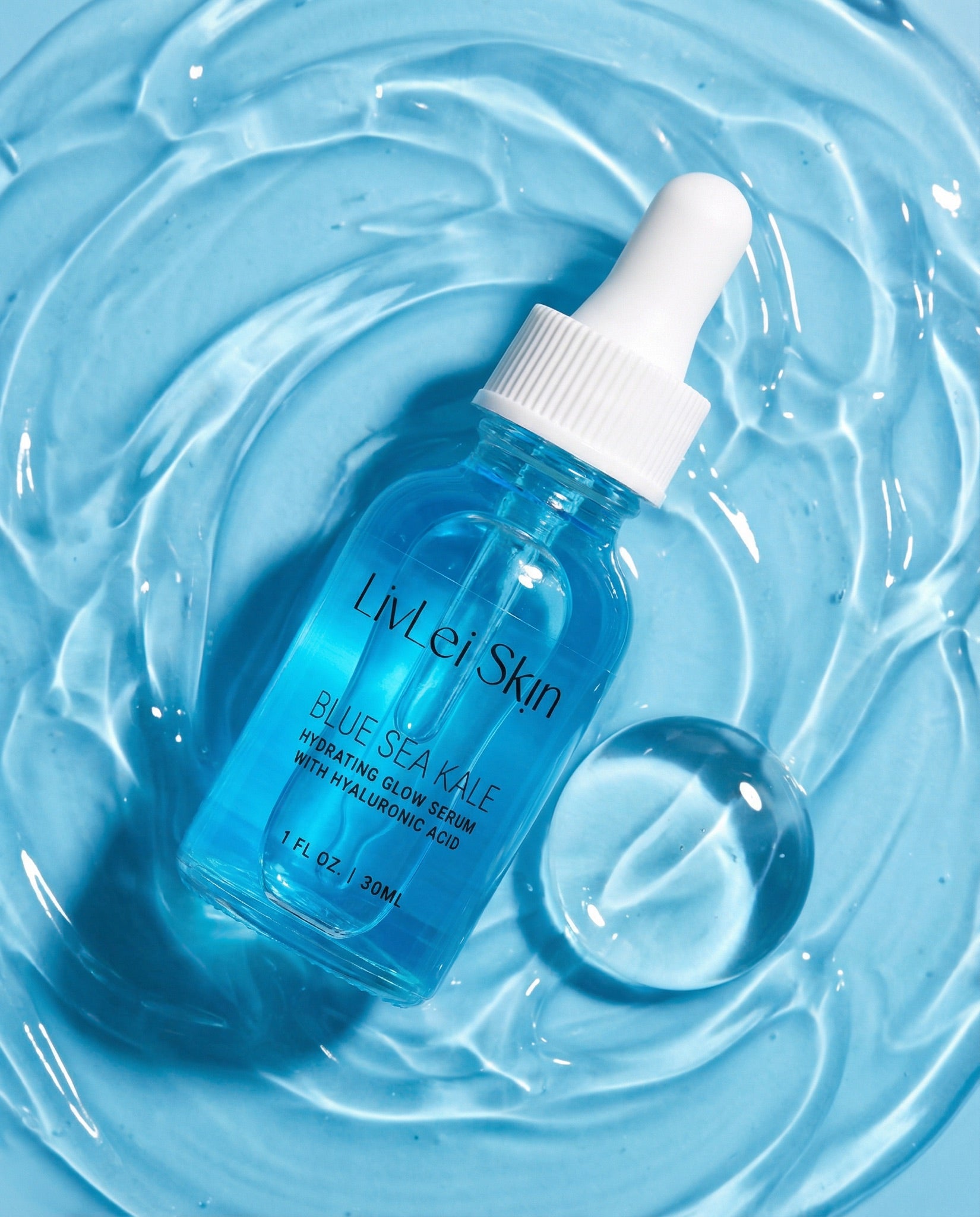
The LivLei Blue Sea Kale Hydrating Glow Serum delivers multi-weight hyaluronic acid at the surface and mid-epidermal level simultaneously through its bi-phase formula. Shake the bottle before dispensing. Press three to five drops into your skin using your palms. The Blue Sea Kale extract provides antioxidant activity that is particularly valuable in the morning when your skin is entering its peak defense period. Palmitoyl Tripeptide-5 begins signaling collagen support from your very first morning application. Allow thirty to sixty seconds to absorb before the next step.
Shop the Blue Sea Kale Hydrating Glow Serum at livleiskin.com/products/blue-sea-kale-hydrating-glow-serum.
Step 3 — Seal with a lightweight moisturizer that works under SPF.
Your morning moisturizer has two jobs. It seals the hydration your serum delivered and creates a smooth, even base for your SPF. A heavy cream in the morning creates a slick surface that causes SPF to move and distribute unevenly. A lightweight gel moisturizer absorbs fully and provides a stable, dry base that holds SPF evenly.
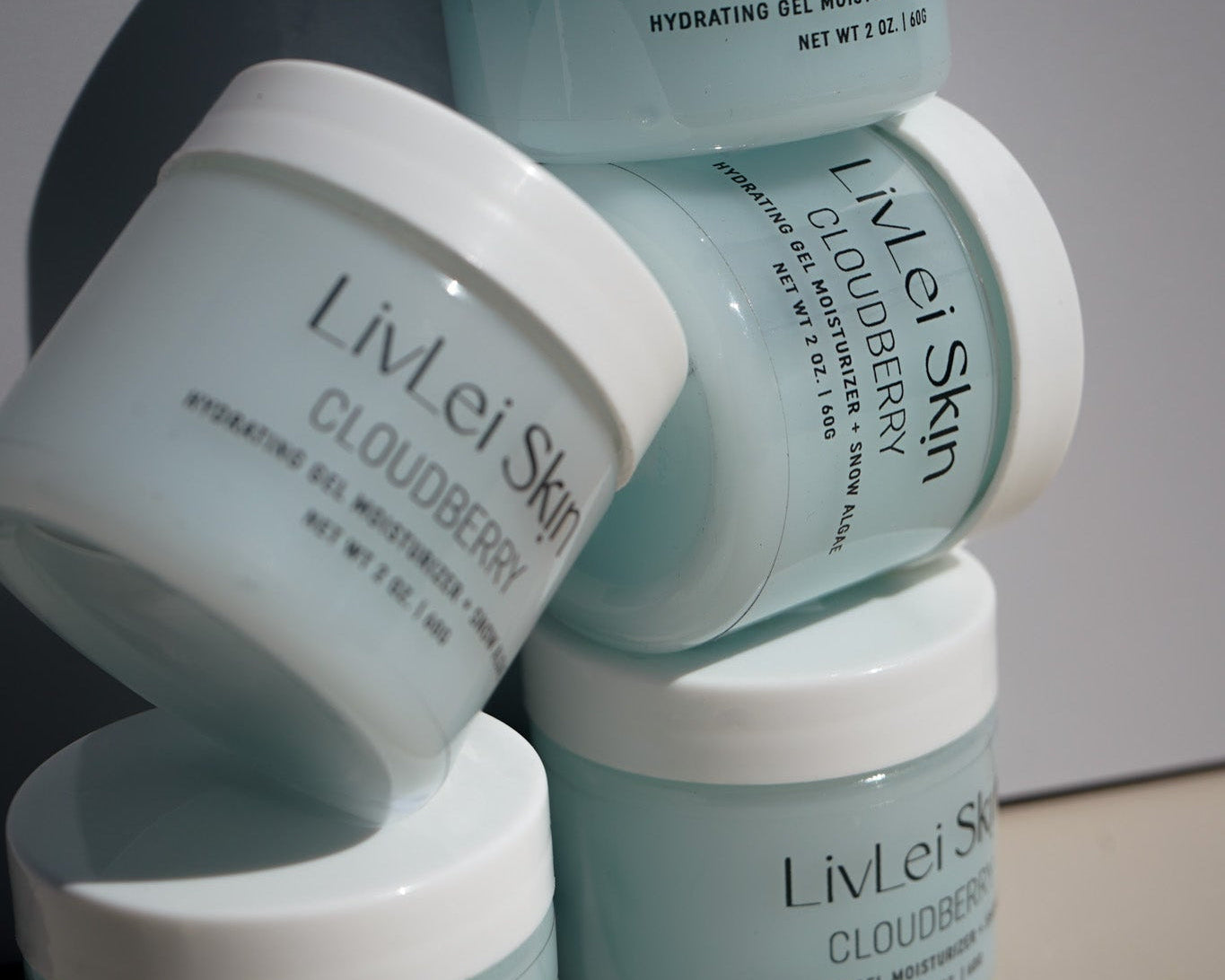
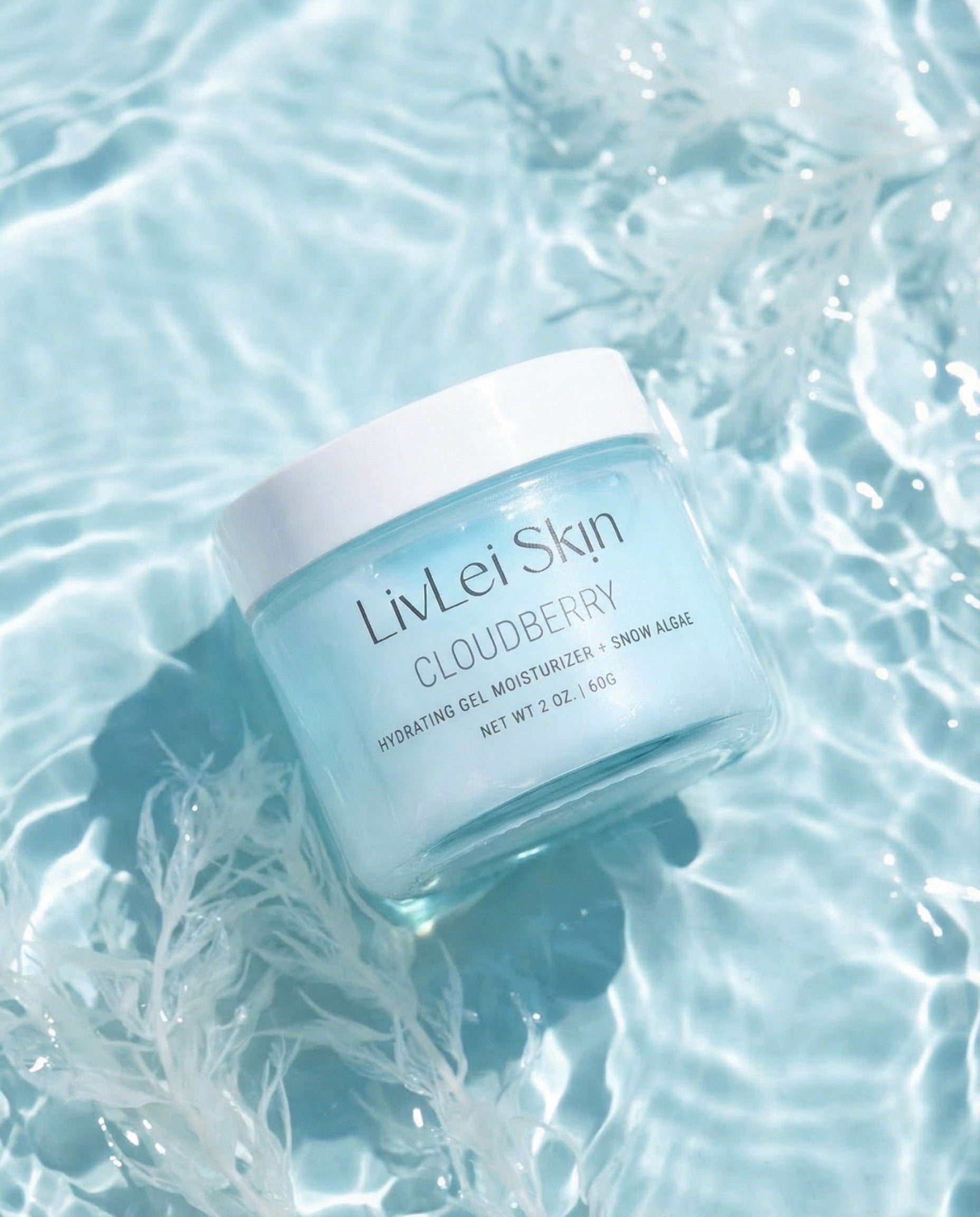
The LivLei Cloudberry Hydrating Gel Moisturizer finishes with a soft matte texture that is specifically suited to morning use. Caffeine in the formula tightens and refines the surface immediately, making pores appear smaller and skin look more even before you apply anything else. Snow Algae extract adds a layer of environmental defense that works alongside your SPF rather than replacing it. Apply evenly to face and neck, give it sixty seconds, then apply your broad-spectrum SPF 30 or higher.
Shop the Cloudberry Hydrating Gel Moisturizer at livleiskin.com/products/cloudberry-hydrating-gel-moisturizer-snow-algae.
Step 4 — Apply SPF. Every single morning. No exceptions.
Broad-spectrum SPF 30 minimum. Apply it as the absolute last step before makeup or going outside. Give your moisturizer sixty seconds to fully absorb first. Apply SPF generously and evenly, including your neck and the backs of your hands if they are regularly exposed.
What Your Night Skincare Routine Is Actually For
The night routine is a repair routine. Its job is completely different from the morning's. You are removing the full accumulation of the day, delivering actives at the depth your more permeable nighttime barrier allows, and providing the emollient and barrier support your skin needs to complete its repair cycle while you sleep.
The evening cleanse is the most important cleanse of the day. Not because your skin is dirtier at night in a visible sense, but because the oil-based residue that builds up from SPF, pollution particles, makeup, and excess sebum needs to be completely removed for your treatment products to function. A water-based cleanser used on wet skin leaves oil-soluble residue behind. Your serum then has to work through that residue rather than reaching clean skin directly.
The increased skin permeability during evening hours means your night application of serum absorbs more deeply and delivers its actives closer to the cell layers where they do their most meaningful work. Peptide ingredients like Palmitoyl Tripeptide-5 are particularly valuable at night because they work in synchrony with the skin's natural collagen signaling cycle, which peaks during sleep. Hyaluronic acid delivers deeper hydration when applied to the more permeable nighttime barrier than it can achieve in the morning.
The night moisturizer does not need to be dramatically heavier than your daytime one for most skin types. What matters is that it stays on the skin long enough to support barrier repair through the overnight cycle. A lightweight gel moisturizer applied at night and left undisturbed for seven to eight hours provides the consistent barrier support the repair cycle needs without the occlusive weight that heavy night creams add unnecessarily for most skin types.
Your Night Routine Step by Step
Step 1 — Cleanse thoroughly on dry skin to remove SPF completely.
The evening cleanse is the step that determines whether every other product in your night routine performs at its best or wastes itself trying to work through SPF residue. SPF filters are oil-based and cannot be removed by water-based cleansers applied to wet skin. The gel oil technology in the Lava Sea Water Dual Nourishing Gel Cleanser is designed specifically for this.
Apply to completely dry skin. Focus thirty seconds of massage time on the forehead, nose, and cheekbones where SPF buildup is heaviest. Add water after the dry massage step and the formula emulsifies into a light lather that lifts all dissolved buildup cleanly. Rinse thoroughly with warm water. If you feel any SPF residue remaining, do one additional short dry application before rinsing again. Your skin should feel completely clean and comfortable, not tight.
Step 2 — Apply your serum to slightly damp skin within fifteen seconds of patting dry.
The timing principle is the same as the morning but the outcome is different. At night, your skin's increased permeability means the serum's active ingredients reach deeper. Shake the Blue Sea Kale Hydrating Glow Serum, dispense three to five drops, and press into slightly damp skin. The Gardenia Stem Cell Extract in the formula supports cell renewal, which is running at its highest rate during the overnight period. The peptide activity from Palmitoyl Tripeptide-5 works alongside the collagen support cycle your skin runs while you sleep. Give it thirty to sixty seconds.
Step 3 — Apply your moisturizer as the final step.
At night, the Cloudberry Hydrating Gel Moisturizer becomes your overnight barrier support rather than an SPF base. The cloudberry lipids work with your skin's repair cycle to rebuild the barrier structure. Snow Algae extract continues its cellular resilience activity during the repair-intensive overnight hours. Apply evenly to face and neck as your absolute final step. No SPF at night. Nothing goes on top of this.
The Ingredients That Belong in the Morning and the Ones That Belong at Night
Not every active ingredient performs equally well at both ends of the circadian cycle. Understanding which ingredients to use when helps you get the maximum benefit from every product in your routine without conflicts or inefficiencies.
Vitamin C is a morning ingredient for most people. It works as an antioxidant by neutralizing free radicals, a function that is most needed during UV and pollution exposure hours. The Sodium Ascorbyl Phosphate in the Cloudberry Moisturizer is stable enough for both morning and evening use, but applying it in the morning means it is present in the skin precisely when its antioxidant function is most needed.
Peptides work best at night. Palmitoyl Tripeptide-5 in the Blue Sea Kale Serum signals the skin to support its own collagen structure. This signaling works in synchrony with the overnight repair cycle when cell proliferation peaks. Applying your serum at night ensures the peptide is present at exactly the time your skin is most receptive to its signal.
Hyaluronic acid benefits from twice-daily application because hydration is a continuous need at all hours. The multi-weight hyaluronic acid in the Blue Sea Kale Serum delivers both surface and mid-epidermal hydration morning and night, maintaining the layered moisture that your skin needs to look plump and healthy throughout the full twenty-four hour cycle.
Marine botanical antioxidants from Blue Sea Kale extract, Snow Algae, and spirulina provide benefits at both ends of the cycle. In the morning they contribute to the antioxidant defense system. At night they support the cellular repair and barrier rebuilding process. This is one of the reasons a formula built around marine botanicals performs as well at night as it does in the morning where synthetic single-mechanism actives often do not.
Retinoids and exfoliating acids are night-only ingredients because they increase UV sensitivity. If you use either of these alongside your LivLei routine, apply them at night between your cleanser and serum and give them a full twenty minutes before layering anything over them.
Why Using the Same Products Morning and Night Is the Right Approach for Most People
There is a pervasive idea in skincare that your morning and night products should be completely different. Separate serums, separate moisturizers, a lighter formula for day and a richer formula for night. The skincare industry profits from this idea. Your skin does not necessarily benefit from it.
For most people with normal, combination, oily, or mildly dry skin, the same three well-formulated products used twice daily at different intensities and with different final steps produce better results than two separate product lines. The reasons are practical and biological.
Practically, a consistent product twice daily means your skin receives the same ingredient inputs on a predictable schedule. Skin responds to consistency. Switching between day and night formulas introduces variability in pH, emollient base, and active concentration that can extend the adjustment period and make it harder to attribute results to specific products.
Biologically, the difference between what morning and night skin needs is largely addressed by adjusting the intensity of your cleanse and by adding or removing SPF rather than by using completely different actives. The same hyaluronic acid that hydrates your morning skin hydrates your night skin more deeply because of increased permeability. The same peptide that signals collagen support in the morning continues that signaling at night when the cycle is most active.
The LivLei three-product system works precisely this way. The same three products, used in the same order, with the morning session ending in SPF and the evening session ending without it. Two minutes of difference in approach. The same ingredients working with your skin's natural cycle at both ends of the day.
Building a Morning vs Night Skincare Routine That You Will Actually Follow
The most technically perfect morning vs night skincare routine has zero value if you do not follow it consistently. Consistency is not a willpower achievement. It is a design decision. The routine has to fit into the actual structure of your day rather than an idealized version of it.
Morning routines work best when they are completed before any other cognitive demands of the day. Skincare applied while half-awake gets done in two minutes and skips steps. Build your morning routine into the first five minutes after you wash your face as a non-negotiable rather than an optional addition to a rushed morning.
Night routines work best when they are completed before you are genuinely tired rather than after you are already in bed. The evening cleanse takes forty-five to sixty seconds on dry skin. The serum takes thirty seconds. The moisturizer takes thirty seconds. Two minutes total. If you wait until you are exhausted to start, those two minutes feel like an obstacle. If you complete the routine an hour before sleep, it takes no effort at all.
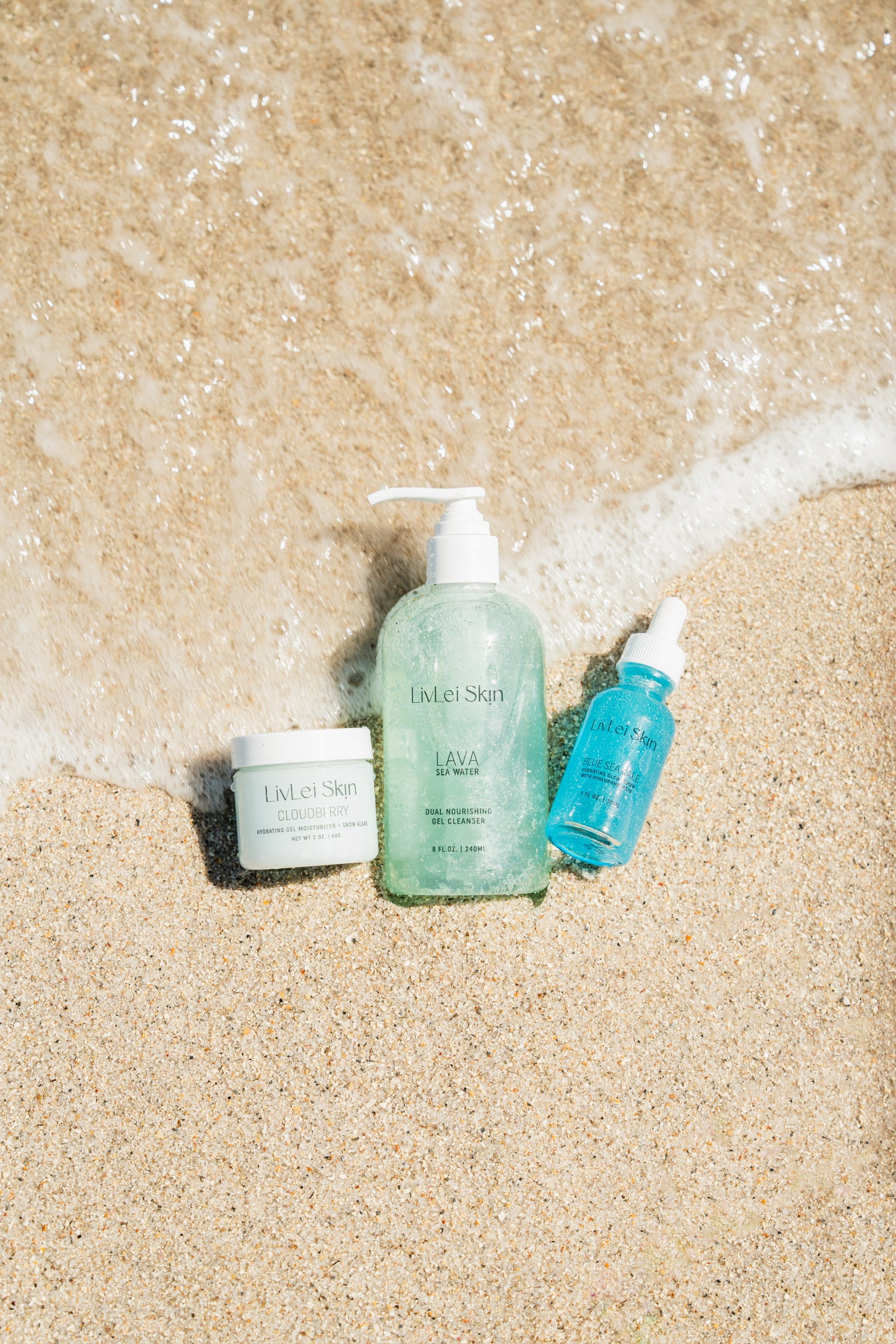
The LivLei Splash Collection gives you everything you need for both sessions in a single purchase. The Lava Sea Water Dual Nourishing Gel Cleanser, Blue Sea Kale Hydrating Glow Serum, and Cloudberry Hydrating Gel Moisturizer adapt to both your morning and night routine without any additional products needed.
Shop the Splash Collection at livleiskin.com/products/splash-collection.
Frequently Asked Questions About Morning vs Night Skincare Routines
Do you really need different products for your morning vs night skincare routine?
Most people do not need completely different products for morning and night. The same cleanser, serum, and moisturizer can serve both sessions effectively when the products are well-formulated. The meaningful difference between morning and night routines is not which products you use but how you use them. The evening cleanse needs to work harder to remove SPF. The night serum application benefits from increased skin permeability. SPF is applied in the morning only. Beyond those adjustments, the same three products used consistently produce better results than two separate product lines because your skin receives predictable, compatible inputs twice daily rather than alternating between different formulations.
Can I skip my morning skincare routine if I am in a hurry?
You can shorten it but skipping it entirely has consequences. At minimum, a thirty-second morning cleanse to remove overnight sebum and product residue followed by SPF takes less than two minutes and protects your skin against the UV damage that is the primary driver of visible aging. The serum and moisturizer add two minutes to that. A compressed morning routine of three steps and three minutes is more protective than no routine at all, and significantly more protective than SPF skipped because the full routine felt like too much for a rushed morning.
Is it bad to apply the same serum morning and night?
No. Applying the same hydrating serum twice daily is one of the most effective approaches for most skin types. Hyaluronic acid and peptides benefit from consistent twice-daily presence throughout the skin's full twenty-four hour cycle. The Blue Sea Kale Hydrating Glow Serum was formulated for morning and night use. Its botanical actives provide antioxidant defense in the morning and support cellular repair at night. The bi-phase delivery system works identically at both application times. Twice daily use over six weeks produces the cumulative hydration, firmness, and glow results that once-daily use achieves more slowly.
What happens if I only do a night skincare routine and skip mornings?
Your skin misses the antioxidant protection it needs during peak UV and pollution hours. The hydration your night routine delivers partially evaporates throughout the morning without a moisturizer to seal it. SPF is absent, which means the collagen, brightening, and barrier work your night products do is partially undone by daily UV exposure. A night-only routine produces some improvement over no routine at all, but it leaves the morning hours, typically the highest-damage period of the day, completely unaddressed. The asymmetry between a strong night routine and no morning protection is one of the most common reasons people see slow or inconsistent results from otherwise good products.
How long should I wait between steps in my morning vs night skincare routine?
Between cleanser and serum, wait ten to fifteen seconds so skin is slightly damp but not wet. This timing is important because humectants like hyaluronic acid bind to surface moisture. Between serum and moisturizer, wait thirty to sixty seconds for the serum to absorb. Between moisturizer and SPF in the morning, wait sixty seconds for the moisturizer to fully absorb before applying SPF. Rushing these intervals reduces how well each product absorbs and can cause pilling when the products have not had time to set before the next layer goes on.
Morning Defends. Night Repairs. Both Matter.
Your skin is running a continuous cycle and your routine is either working with it or ignoring it. A morning vs night skincare routine that understands the biology behind each session gives your skin exactly what it needs at exactly the right time.
Protect in the morning with a gentle cleanse, layered hydration, barrier sealing, and SPF. Repair at night with a thorough oil-dissolving cleanse, deep serum delivery, and overnight barrier support. Three products handle both sessions completely.
The LivLei Splash Collection covers everything your morning vs night skincare routine needs. Vegan, ocean-inspired, and formulated for all skin types.
Shop the Splash Collection at livleiskin.com/products/splash-collection and build the routine your skin has been waiting for.